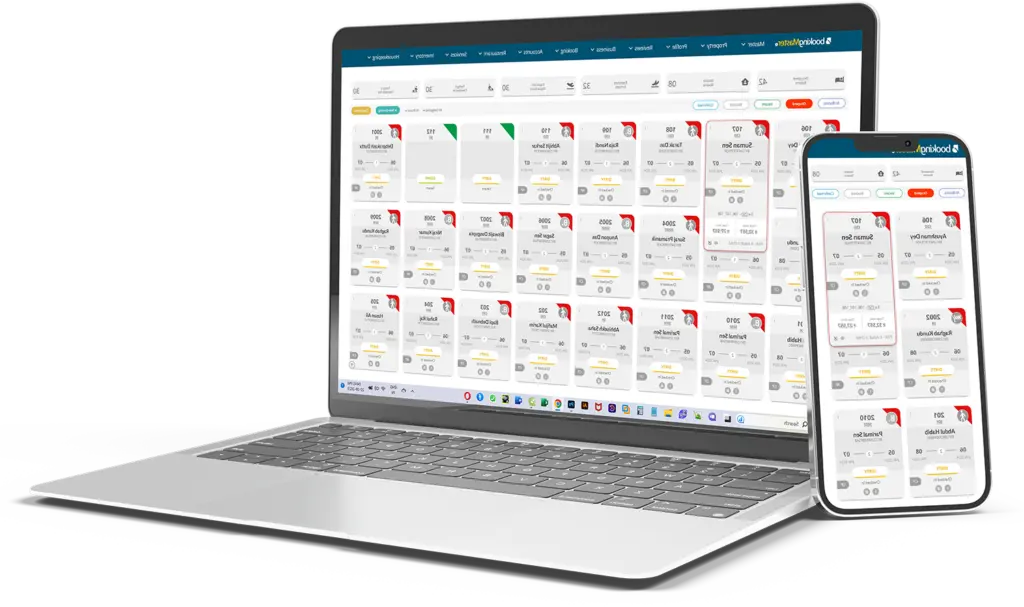
Labour is the largest controllable cost for most small hotels. Yet with staff shortages,
rising hotel labour costs and growing guest expectations, simply hiring more people is no
longer the answer. Improving employee productivity has become the fastest way to increase
profitability without compromising service.
This has become even more critical as India's hospitality sector faces a shortage of over
150,000 trained professionals, annual attrition of around 40% and a projected workforce gap
of 11 million by 2035. Improving employee productivity has become a business necessity for
small hotels.
In this article, we will discuss hotel productivity tips for small properties to help
improve efficiency, reduce costs and enhance guest satisfaction.
Key Takeaways
-
The tight labour market and wage inflation make it crucial to improve hotel
staff performance and protect small hotels' bottom lines in 2026.
-
Demand management and PMS automation provide the quickest wins.
-
Job training and manager mentoring prevent the staff turnover that offsets
productivity improvements in other areas.
-
Use departmental KPIs, not combined statistics, to identify where improvements
can be made next.
Below are ten specific ways to improve employee
productivity in small hotels:
1. Replace Fixed Shift Rules with Demand-Based Scheduling
It is common practice for most small hotels to create fixed staffing schedules for
housekeeping and the front desk based on habit rather than occupancy information. That means
overstaffing on slow days and scrambling on busy ones.
Extract 90 days of occupancy and check-out patterns from your Property Management System
(PMS). Set up your shift rosters based on the demand blocks. Also, adjust weekly, not
quarterly.
This approach is backed by research. Cornell University housekeeping optimization
research
showed that flexible, data-based scheduling can save as much as 17% on total labour expenses
when compared to fixed rule scheduling. It also reduces overtime exposure.
Result: Less overtime spending, reduced number of idle hours,
improved
hotel staff
efficiency and the housekeeping department completing all turnovers before arrival of the
guests.
2. Cross-Train Employees Among Front Desk, Housekeeping and F&B Positions
In a hotel of 15 to 25 employees, a single absence could cripple the whole shift since only
one employee would be able to do the job.
Create a very basic skills chart indicating who can step in to fill what positions. Rotate
staff through cross-training blocks monthly, not as a one-time onboarding event.
Formal training and cross training initiatives such as the one practiced by Orient-Express
can help employees stay around 20% longer.
Outcome: Reduced shortages in staffing, less dependence on
expensive
overtime work and an
adaptable workforce which responds to occupancy changes without the need to add new
employees.
3. Make Your PMS the Operational Command Center, Not Just a Booking Log
Most small hotels continue using the property management system just for booking and
disregard modules such as housekeeping automation, reporting automation and upselling
automation. Perform an audit to see what modules are used by your team. Start using
housekeeping board automation, mobile tasking and night audit reporting automation.
In the 2026 HotelTechReport
survey involving more than 1,200 operators, 89% reported saving
two to ten hours plus every week through PMS automation, while 17% saved more than 500 hours
per year.
This survey also showed that 92% of hotels reduce the process of staff onboarding from weeks
to days with modern PMS interfaces.
Advantages of leveraging a PMS include: Hundreds of regained
labour hours each year, fast
onboarding process and no reporting errors.
4. Integrate Your PMS With Your Channel Manager and Housekeeping App
Disparate systems require re-entering information between each platform, leading to wasted
time and overbooking risks. Integrate your PMS, channel manager and housekeeping app using
existing APIs instead of exporting information manually. Ensure that there is a two-way sync
in real-time prior to go live.
Booking Master’s in-house research shows properties can cut manual OTA management time by
roughly 30% in the first quarter and reduce overbookings by up to 90%. A boutique hotel
partnering with Booking Master showed a 35% increase in direct bookings after integrating
their systems.
Benefits of integration: No more double-bookings, no need to
reconcile channels and staff
freed up for guests' assistance.
5. Introduce Mobile or Self-service Check-In
Congestion at the front desk during peak times for arrivals is one of the most common
productivity issues in small hotels.
Enable mobile check-in via your PMS or guest app and maintain one staffed lane for people
that like face-to-face interaction.
According to HotelTechReport, 70% of domestic travellers prefer to use self-check-in
facilities nowadays.
Self-service results in shorter queues, freed up-front desk hours that could be utilized for
upselling, guest recovery and higher review scores.
6. Coordinate Housekeeping and Front Desk in Real Time
If the status of housekeeping is not visible at the front desk, the guest will have to wait
for a room which is already cleaned and employees will be wasting time on radio
communication and walkie talkies.
Introduce a real-time digital housekeeping board which will update the status of the rooms
and alert about the priority cleaning due to early check-in of the guest.
Research shows that when front desk and housekeeping teams share occupancy
and status
updates in real-time, hotels maximize their capacity. In smaller to medium-sized hotels (50
rooms approx.), such a synchronization can boost daily income by ₹15,000-₹25,000 by
significantly cutting down the idle time of a room between departures and arrivals.
7. Reengineer Onboarding for Increased Speed to Productivity
According to the U.S. Bureau of Labor Statistics (BLS) data on-the-job training is necessary
in 98% of housekeeping positions, which means that the first few weeks on the job of a new
employee will directly impact productivity.
Change orientation programs into task-based checklists, shadowing and 30/60/90-day review
structure (tied to measurable tasks).
Findings from the Center for Hospitality Research at Cornell confirms that lost
productivity
during a new hire's learning curve is the single largest expense in employee turnover.
Re-engineering Onboarding results in faster time to productivity for each new recruit, fewer
resignations among newer employees and reduced retraining time by supervisors.
8. Make Specific Investments in Manager Training, Not Just Frontline Training
Frontline engagement within the hospitality sector is generally below average for on-site
positions and the only way to improve this would be by improving managers. Give every shift
supervisor structured coaching training, not just task training.
Include regular one-on-one sessions for addressing obstacles and improve hotel staff
performance.
According to Gallup,
some 70% of team engagement can be attributed to the quality of the
manager and business units in the top quartile of engagement are 23% more profitable than
bottom-quartile units.
9. Automate Back-Office Reporting and Night Audits
Night audit processes and financial reporting take time silently, time which can be used for
other purposes like serving guests or revenue management.
Leverage technology and tools that automatically conduct night audits and financial
reporting by importing data directly from the PMS and POS system.
Analysis of hotel automation reveals that integrated reporting tools result in hours saved
on a weekly basis at each property and minimize errors in accounting.
This results in reduced hotel labour costs, more efficient month-end close process and
management spending time on guests rather than on spreadsheets.
10. Track Department-Level Productivity, Not Combined Average
One "labor cost percentage" obfuscates the inefficiencies, which may exist in either
housekeeping, front desk, or F&B.
Break labor tracking into rooms, front desk and F&B "stacks." Measure hours per occupied
room for each separately, monthly.
Recent hotel labor cost data shows that
total hours per occupied room dropped 5.9% across
the industry in 2025, with guest services improving by 13.5% and housekeeping improving by
7.1%. The numbers prove that separate department-wise measurements yield better results than
averages.
Advantage: Clear indication of the department that requires
improvement without resorting to
generic cuts as it hurts service quality.
Top Reasons for Low Employee Productivity in Small
Hotels
Productivity of employees can be hindered due to various issues related to processes,
workforce and technology. The following are the main causes of poor employee productivity at
small hotels.
Staff Shortages
Since small hotels have lean teams, any single absence is likely to put undue strain on the
remaining staff, resulting in exhaustion and delayed guest services.
Labor accounts for 30–45% of hotel operating costs, making any shortage in staffing hard to
handle. Employee shortages affect the service quality, hotel staff efficiency and morale.
High Employee Turnover
Frequent staff changes require constant retraining. This creates inconsistencies in service
quality and further results in the loss of valuable operational knowledge over time.
Annual turnover rate in the hospitality industry ranges between 70-80%, while it is only
10-15% in any other industry. In a Cornell University
study, it was shown that replacing an
employee incurs costs of around $5,900 due to recruitment, onboarding and training.
Poor Scheduling
Inefficient shift planning can lead to understaffing during busy hours and overstaffing
during slower periods. This leads to wastage of hotel labour costs. It lowers the team
morale too.
For example,
when Villa Copenhagen adopted automated scheduling tools, they were able to
automate 13,778 previously manual tasks. This freed up valuable time that was redirected to
guest service and business development.
Manual Operations
Dependence on paper-based logs, spreadsheets or disconnected systems for check-ins,
housekeeping and billing makes processes take a lot more time than they would have taken if
otherwise.
A good example is Sher Bengal Resort that implemented the Booking Master Hotel Technology.
The property witnessed a 20% reduction in waste generation and a 15% increase in the
accuracy of inventory management within a few months. This clearly indicates the benefits
that organizations can reap through automation of manual processes.
Lack of Training
If staff does not receive proper training, they may be unable to handle guest demands
effectively, thereby making errors in providing their services.
Industry data shows that in housekeeping, the initial rate of job turnover is quite
high,
ranging from 50 to 55 percent within the initial three months of employment. This type of
job turnover is referred to as "job shock" or early disengagement. It typically stems from
unrealistic workload expectations, lack of manager support and poor training.
Outdated PMS (Property Management System)
Older or inefficient software can cause delays during the reservation, reporting and billing
process. As a result, employees end up spending more time doing tasks that are supposed to
be quick.
Conversely, hotels utilizing modern and user-friendly systems claim faster training
processes. New team members become comfortable using the software in as little as three
days.
Poor Communication
Miscommunication between different departments, for instance, the reception desk and
housekeeping, can cause unnecessary lags and duplication of tasks, which could otherwise be
avoided.
Poor communication remains one of the main factors driving dissatisfaction and turnover. It
goes without saying that employees who don't understand their roles or feel heard by
management are more likely to become frustrated and leave.
Low Employee Engagement
When employees feel undervalued or disconnected from the hotel's goals, motivation naturally
declines. This directly affects service quality and overall hotel staff productivity.
This is closely tied to burnout too. Nearly half of hospitality managers report feeling
burned out themselves and 64% have seen employees quit specifically because of it.
Conclusion
Increasing employee productivity in small hotels is not about pushing staff to work harder.
It's about removing everyday challenges like fixed schedules, manual processes and
disconnected systems so they can work more efficiently. The hotels that will be making
strides in 2026 are those that combine the right technology with effective management to
enhance employee productivity and deliver better guest experiences.
Want to Boost Staff Productivity Without Increasing Labour Costs?
Booking Master's Hotel Management Software helps small hotels automate operations,
streamline housekeeping, optimize staff scheduling and enhance guest experiences.
Book a Free Demo
 Palash Saha